
What is peat and peatland?
Peat consists of partly decomposed organic matter, derived mainly from plant material which varies depending on geography. In the UK, peat is formed mainly from bryophytes (mostly sphagnum mosses), herbs, shrubs and small trees.
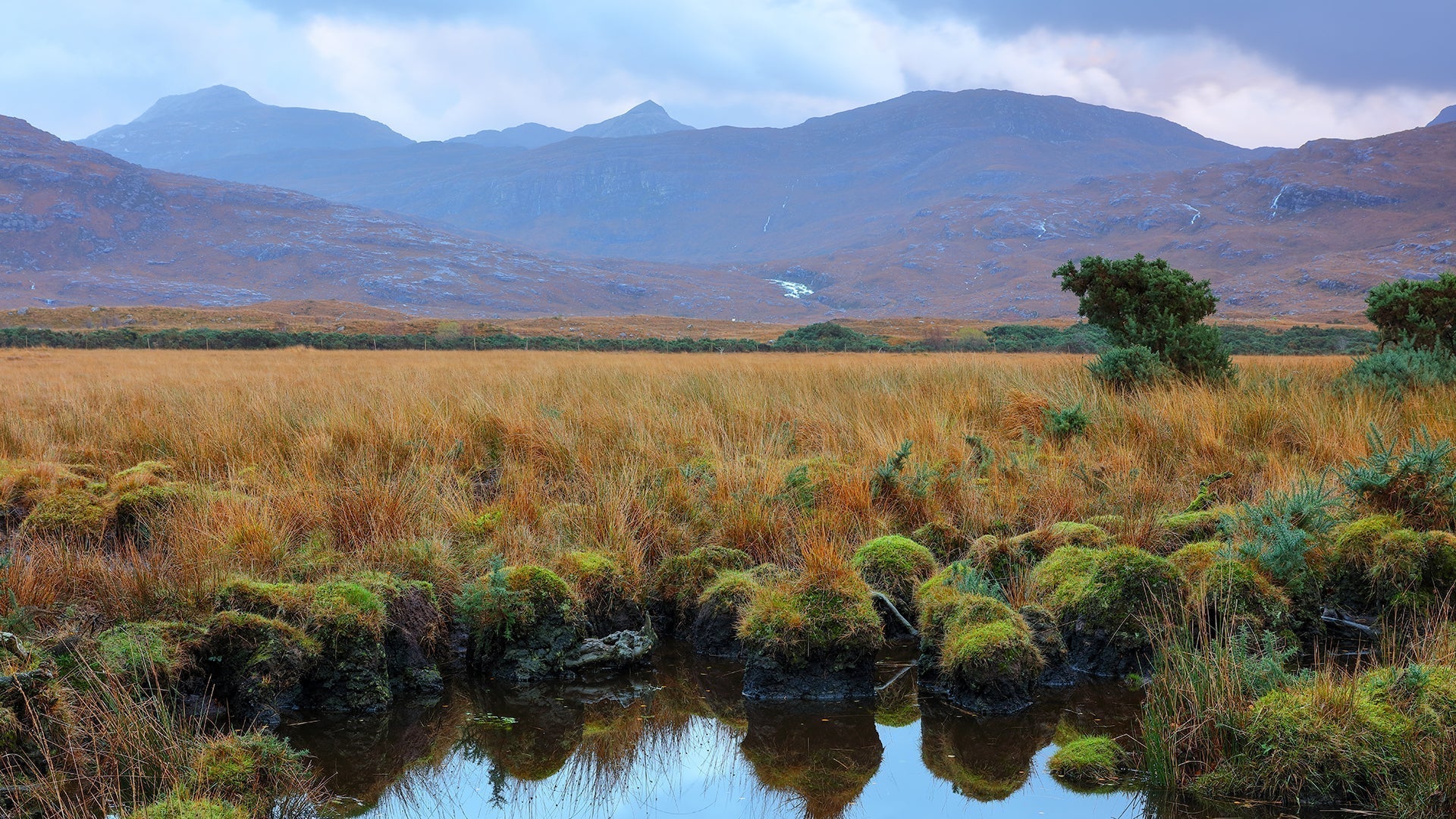
Peatlands are terrestrial wetland ecosystems, boggy areas of land where peat has formed as a result of years of waterlogged, oxygen-deficient conditions with high acidity, low nutrients and slow decomposition rates. Peatlands are found all over the world but in the UK we have three main types of peatland habitat: lowland raised bog, blanket bog and fen. Just one metre’s depth of peat takes 1,000 years to form!
Just one metre’s depth of peat takes 1,000 years to form!
Why should peat be left in the ground?
Peatlands are essential to combating climate change. In the UK they store 3.2 billion tons of carbon! However, currently, 80% of the UK’s peatlands are damaged, resulting in more carbon emissions and putting them in urgent need of restoration.
What’s more, spongy peat bogs store an incredible amount of water, slowing its flow and helping to mitigate dangerous flooding. They effectively act as giant water filters too, creating high quality water with low levels of pollutants, requiring only straightforward treatment at the water treatment plant. In fact, up to 70% of our drinking water in the UK is sourced from catchments dominated by peatland habitat.
Lastly, peatlands are incredibly biodiverse, home to rare and endangered insects, birds and other wildlife such as large heath butterflies, wading birds like dunlin and weird and wonderful rare plants like insect-eating great sundews. They have even been found to preserve archaeological objects.
What’s going in the UK horticulture industry when it comes to peat?
In 2022, the total amount of peat used in the UK horticulture industry for amateur and professional gardening was 950,000 metres cubed, enough to fill 380 Olympic swimming pools! With only 17% of peatlands sufficiently legally protected globally, this trade continues to destroy peat bogs in the both the UK and abroad.
The sale of peat in the UK is due to be banned. However, unfortunately, no date has been set by the government and legislation continues to be delayed year after year. At Garden Wilder we proudly sell 100% peat-free products and support legislation that will bring the sale of peat to an end.
At Garden Wilder we proudly sell 100% peat-free products and support legislation that will bring the sale of peat to an end.
Tips for peat-free gardening:
Despite being nutrient-poor, many people assume peat compost is beneficial, perhaps feeling it’s essential for its water retentive properties or, simply, because they've always used it. However, growing without peat is much easier than you might think. In fact, according to the RHS, high-quality peat-free compost can retain water as well as, or even better than peat-based mixtures.
- Only buy peat-free compost! There are many great alternatives to peat compost out there already. Look out for certified-Organic and Responsible Sourcing Scheme (RSS) accredited products to ensure even better quality and standards.
- If you’re buying plants for your house or garden, look for plants that are grown in peat-free compost. If this proves difficult, ordering compost-free 'bareroot' perennial plants in winter or growing your own plants from seed can help to get around this problem. This has the added benefit of avoiding plastic plant pots, too.
- If you feel your plants may need extra water, you can:
- mix handfuls of fluffy wool into your peat-free compost or potting mix. This is especially useful in fast-draining plant pots. Wool will also release extra nutrients as it biodegrades.
- put saucers under pots in hot, dry months.
- put mulch down around your potted plants and plantings. There are many natural, biodegradable materials you can use to do this, for example products made of wool, coir, hemp, jute or leaves collected to form leaf mould. This is especially good for plants like young tree saplings, vegetables such as marrows, or moisture-loving perennials like hostas. Mulching will also help to stop weeds and enrich the soil.
The Peat Free Partnership is a broad coalition of horticultural businesses and environmental NGOs across the UK with the goal of ending the commercial trade in peat across the UK. Please add your name to their petition: https://actnow.peatfreepartnership.org.uk/end-peat-sales/